
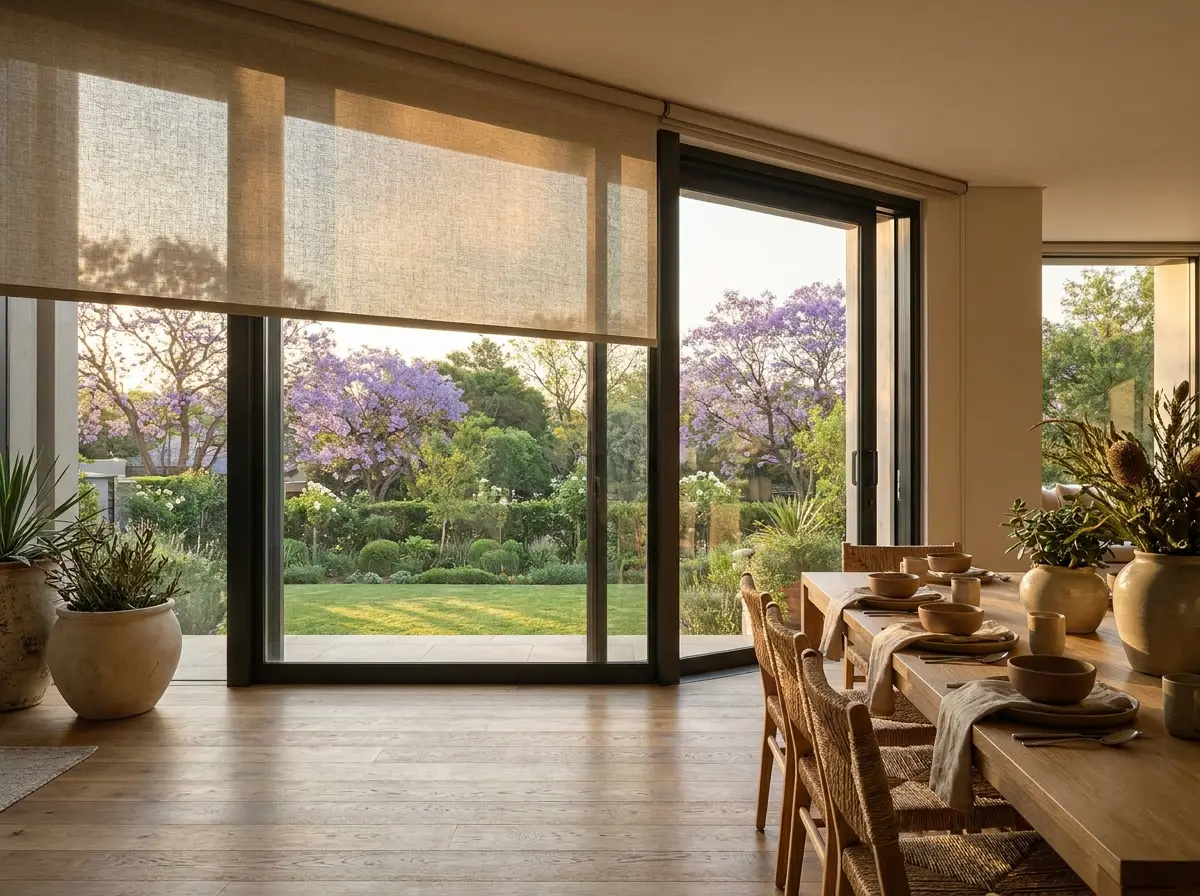
Blinds & motorisation for Brooklyn
The same free-measure, made-to-measure service we run in neighbouring Hazelwood, right next door in Brooklyn.
What homes in Brooklyn are like
Brooklyn sits at the heart of Pretoria's embassy belt, one of the city's most established upper-tier addresses — a mix of older character homes on generous stands, sleek architect-built rebuilds, and a fair number of consular or diplomatic residences where discretion is part of the brief. The housing stock spans decades, which means every specification is genuinely different: a 1970s home with smaller original windows sitting a few doors down from a full glass-fronted rebuild.
It's also a top-tier price band for Pretoria, which tends to mean bigger budgets for the shading spec itself — motorisation, concealed systems and premium fabrics aren't a stretch here, they're closer to the expected standard.
Which products suit Brooklyn
Older character homes with smaller punched windows usually suit venetian blinds or a well-specified roller; newer rebuilds with big glass toward a garden or pool lean toward motorised rollers, external venetians, or a concealed ceiling-recess system where the architecture calls for it. Security and discretion matter more here than in most suburbs, so cordless and motorised operation tends to be the default rather than an upgrade conversation.
Whatever your home's era, the free in-home measure covers every window on the property in one visit.
How the window itself changes the fit
The era of a Brooklyn house decides more about the fitting than the fabric does. A 1970s or 1980s home tends to have punched openings set into a deep plastered reveal, and that depth is a genuine choice: sitting the blind inside the reveal keeps the joinery visible and leaves a hairline of light down each edge, while running it face-fit over the opening is noticeably darker but covers the reveal and the frame. In a bedroom that matters; in a study it usually does not. A rebuilt or architect-designed elevation has the opposite problem, almost no reveal at all, so the headbox has to be planned rather than tucked away, and a cassette in a colour that matches the frame is what keeps it looking deliberate.
Because so many stands here run to a wing and an addition, we look at the property as a set of elevations rather than a list of rooms. Holding one fabric family across a street-facing run is what makes a mixed-age house read as considered from the pavement, even when the products behind the glass differ from window to window.
Discretion, storms and the honest limits
Cordless and motorised control is the default we quote here rather than an upgrade line at the bottom of the page. It is safer where small children are in the house, it removes the loop of chain that reads as untidy on a formal window, and on a run of glass along one wall it means the whole elevation moves on one press instead of nine separate pulls.
Anything that lives outside the glass is specified around the Pretoria storm season. Thunderstorms build through the afternoons from about November to February and bring real hail with them, so an exterior product gets a wind sensor as part of the specification, not as an accessory added later, and the fixings are chosen for the substrate actually behind the render.
Three limits we will tell you at the measure rather than after it. Sunscreen mesh is a daytime privacy product and reverses once the lamps are on inside. A single roller runs to roughly three metres of fabric before a join line becomes necessary, and on a genuinely oversized opening linked motorised blinds look better than a seam. And a concealed recess is a ceiling decision, so it is far simpler during a renovation than after one.
Let's measure your windows properly.
Free in-home measure and a written quote per window — no showroom trip required.