
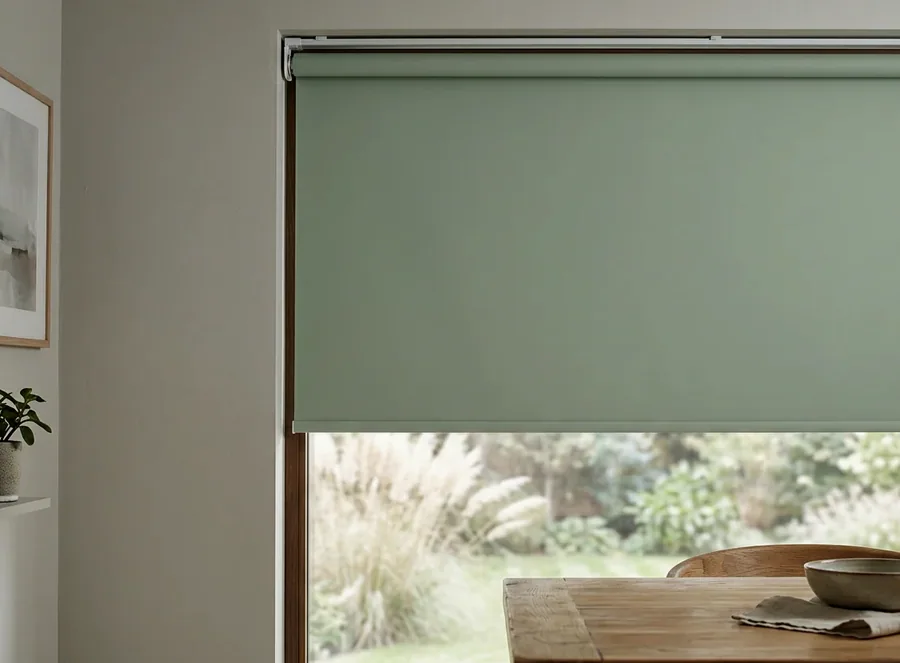
Blockout & Sunscreen Roller Blinds
The everyday fix for Hazelwood's open-plan lounges, kitchens and bedrooms — a clean fabric panel on an aluminium tube, made to measure per opening.
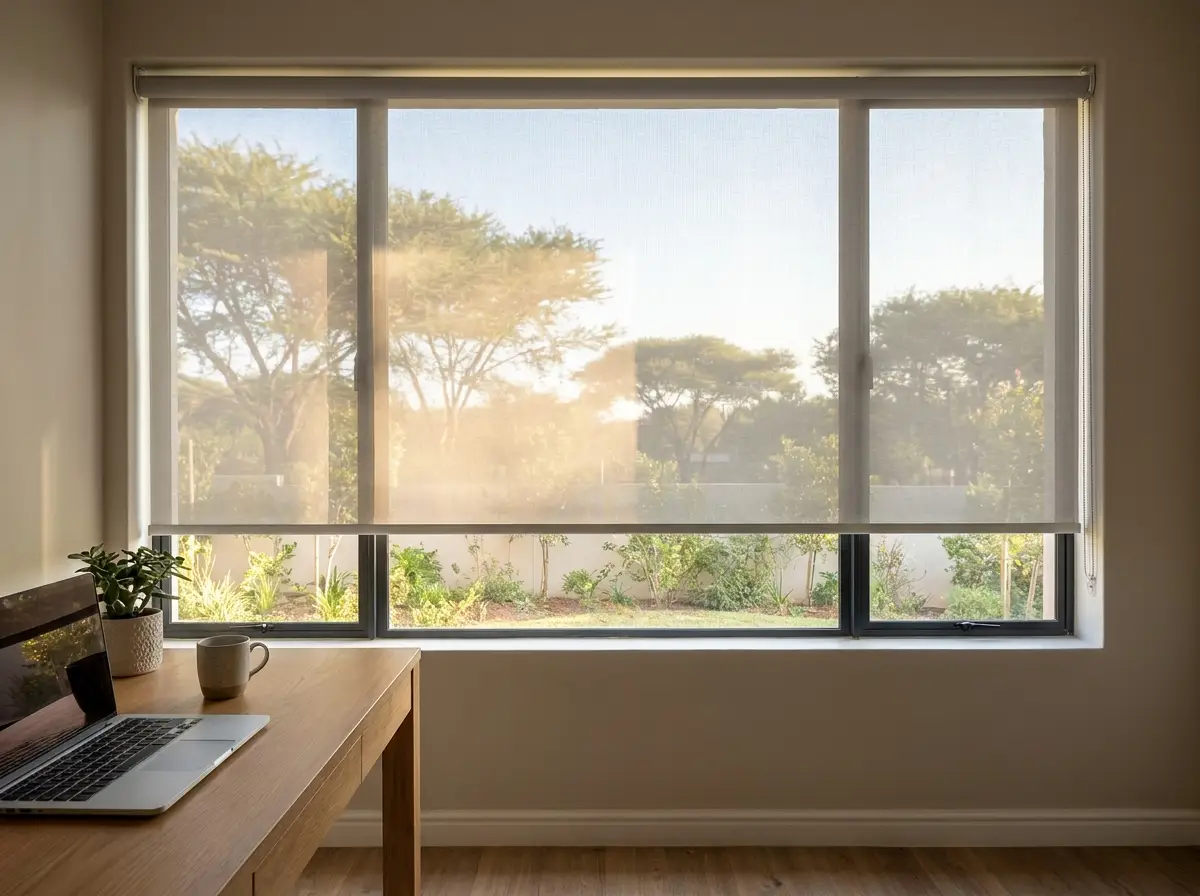
Built for the light a Hazelwood cluster actually gets
Most Hazelwood living areas are built around a wall of glass — a sliding door onto the pool deck, a kitchen that opens straight onto the garden, a double-volume window in the entrance. That much glass answers the light problem for half the day and creates it for the other half: a hard, low glare once the highveld sun swings onto a north- or west-facing elevation. A roller blind is the simplest, tidiest way to answer that on the rooms that don't call for a concealed recess or motorised treatment.
Fabric is the decision that matters
Blockout fabric stops light completely — the right call for bedrooms, media rooms and any space where afternoon glare through a big window is a problem. It carries a genuine thermal benefit too, working as an extra layer against summer heat and winter cold on a large single-glazed pane.
Sunscreen fabric, by contrast, keeps the view while cutting glare and UV — 3–5% openness is the usual sweet spot for a lounge or kitchen that looks onto the garden or pool. It's a daytime privacy product only: once the lights go on inside after dark, a sunscreen blind turns see-through from outside, which matters on a street-facing cluster elevation.
Double rollers, for the rooms that need both
A double roller pairs blockout and sunscreen fabric on one bracket — sunscreen down by day for the view and glare control, blockout down at night for proper dark and for privacy on a street-facing window. It's the honest answer for a main bedroom or a lounge that overlooks a communal driveway.
Where a roller isn't the right call
Very wide, unbroken spans need a join line in the fabric, which shows — on a genuinely oversized opening we'll usually suggest motorised linked blinds or a concealed recess system instead. We'll say so plainly at the free measure rather than sell you the wrong product.
Fit and control
Chain control comes with a child-safe tensioner as standard; spring-assist and motorised options are available if you'd rather have no cord at all, which is the common choice in Hazelwood's cluster developments. A cassette or pelmet valance hides the tube for a neater finish, colour-matched to your frames — the detail that reads as considered from the street, not just from the couch.
What it costs
A guide, per square metre, installed. A chain or spring roller in blockout, sunscreen or a light-filtering fabric works out between R1,000 and R1,600 per square metre; a plain blockout sits at the lower end and a premium mesh or a double bracket near the upper. Put a motor in the tube and the same window becomes R2,500 to R3,800 per square metre, the control you choose deciding where inside that.
Two caveats we would rather you heard now than at the quote. Small windows carry a minimum charge, because the brackets, the tube and the time on the ladder are much the same whatever the width. And a band is not a quote: the number for each opening is calculated at the free measure and written down before anything goes to the factory.
Roller blinds across Hazelwood and the belt
Fitting blockout and sunscreen rollers from Brooklyn's embassy-belt renovations to Menlo Park's open-plan additions, Lynnwood's big established stands and Groenkloof's reserve-facing verandas — the same free measure, wherever your windows are.
Let's measure your windows properly.
Free in-home measure and a written quote per window — no showroom trip required.